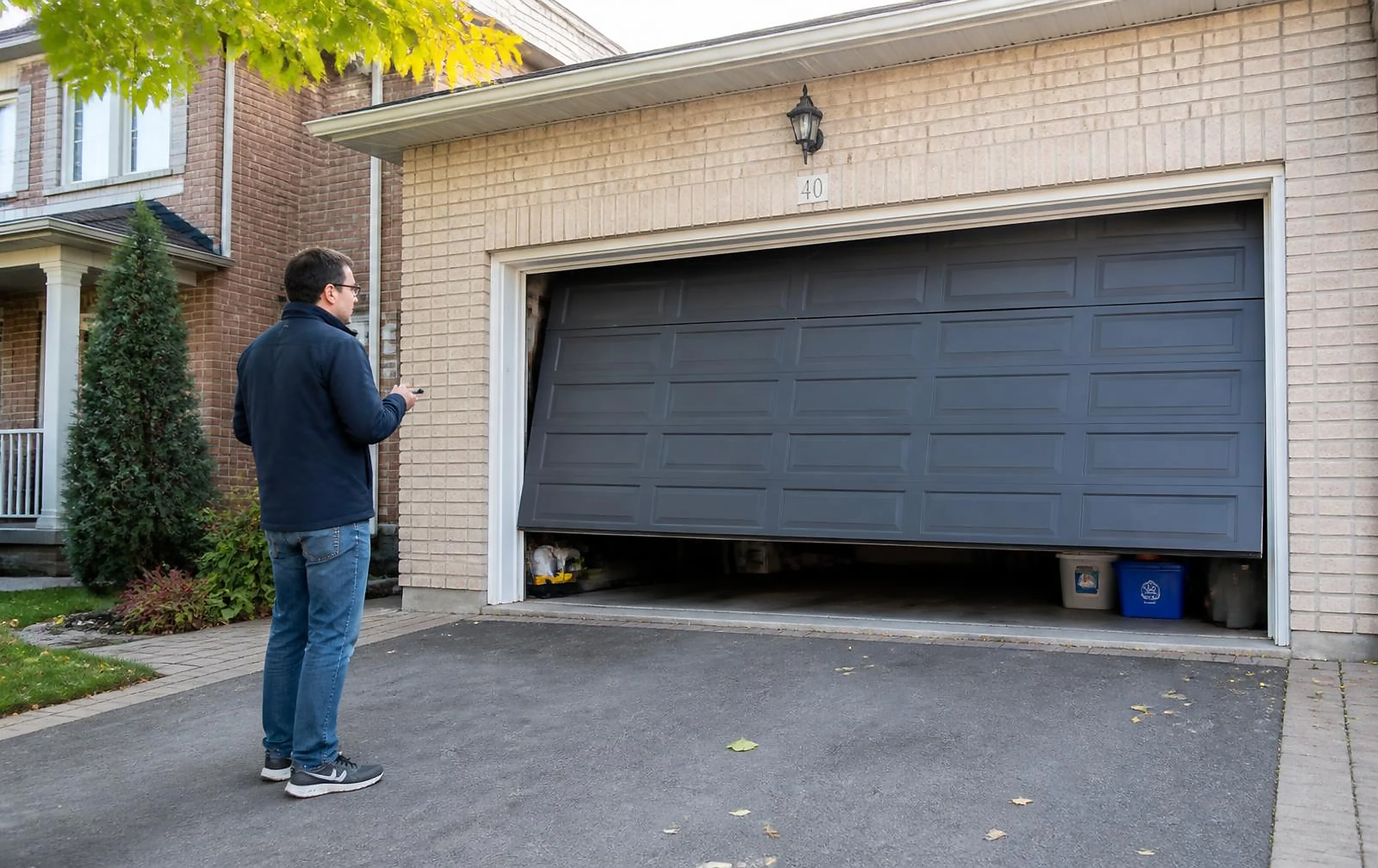
Your garage door is the largest moving object in your home. A standard double car steel door weighs between 150 and 250 pounds, and an insulated wood or carriage style door can push past 400 pounds. All of that weight is balanced by springs wound to a precise turn count, guided by two steel tracks, and nudged along by an opener motor that produces less than half a horsepower of real force. The opener does not lift the door. The springs lift the door. The opener only gives it a push.
That single fact explains almost every failure in this guide. When something in the counterbalance system goes wrong, the opener suddenly finds itself asked to lift hundreds of pounds it was never designed to move, and it does exactly what its safety logic tells it to do. It hums, it clicks, it reverses, or it does nothing at all. Working through the causes in the right order saves you money, because roughly one in four calls we take in Toronto and the GTA turns out to be a battery, a tripped outlet, or a trolley that was never reconnected after a power outage.
The first sixty seconds: read what the door is telling you
Before touching anything, stand in the garage, press the wall button once, and pay attention. The behaviour you observe narrows the cause faster than any tool.
- Absolutely nothing happens, no lights, no hum. Suspect power supply, a tripped GFCI outlet, or a dead opener logic board.
- The opener light blinks but the door does not move. Suspect blocked or misaligned safety sensors, or lock mode engaged on the wall console.
- The motor hums or grinds but the door stays put. Suspect a broken spring, a stripped gear sprocket, or a disengaged trolley.
- The chain or belt moves while the door stays still. The trolley has been disconnected from the door arm, or the trolley carriage nut has failed.
- The door lifts two to six inches and drops back. Suspect a broken spring, an engaged manual lock, a jammed roller, or a frozen bottom seal.
- The remote does nothing but the wall button works perfectly. The opener is healthy and the fault is in the remote or the antenna.
The manual balance test
Power, remotes and keypads: the cheap causes first
Start here every single time. These checks cost nothing, take four minutes, and resolve a surprising share of the emergency calls we receive in Etobicoke, Mississauga and Vaughan.
Check the outlet, not just the breaker
Most garage openers are plugged into a ceiling outlet that shares a GFCI circuit with the exterior receptacles on your driveway or patio. One rainy night can trip that circuit and kill the opener without touching any breaker in your panel. Unplug the opener, plug in a phone charger or work light, and confirm the outlet is live. If it is dead, look for a GFCI outlet with a reset button anywhere in the garage, on the exterior wall, or in the nearest bathroom, and press reset.
Replace the remote battery before you replace the remote
Remote batteries typically last one to two years, and Ontario winters shorten that considerably because a lithium coin cell loses a chunk of its voltage below freezing. A remote that works inside the warm house but fails from the cold driveway is a battery story, not a receiver story. Swap in a fresh CR2032 or CR2016, wipe the contacts with a dry cloth, and try again.
Reprogram, then check the antenna
If a new battery does not do it, find the Learn button on the back or side of the opener head, press it once, and press the remote button within thirty seconds. If several remotes and the keypad all failed at the same time, look at the short wire antenna hanging from the opener. It should dangle straight down and be free of insulation, drywall and storage boxes. LED shop lights and some smart bulbs also generate radio interference that can cut remote range from thirty metres to three, so if the failure started the week you changed the garage bulbs, that is your culprit.
Keypad specifics
Outdoor keypads take the worst of the weather. Moisture behind the buttons, a nine volt battery flattened by cold, and faded key printing that hides a stuck contact are all common. Open the housing, dry it, replace the battery, and reprogram the PIN.
Broken torsion or extension spring: the number one real failure
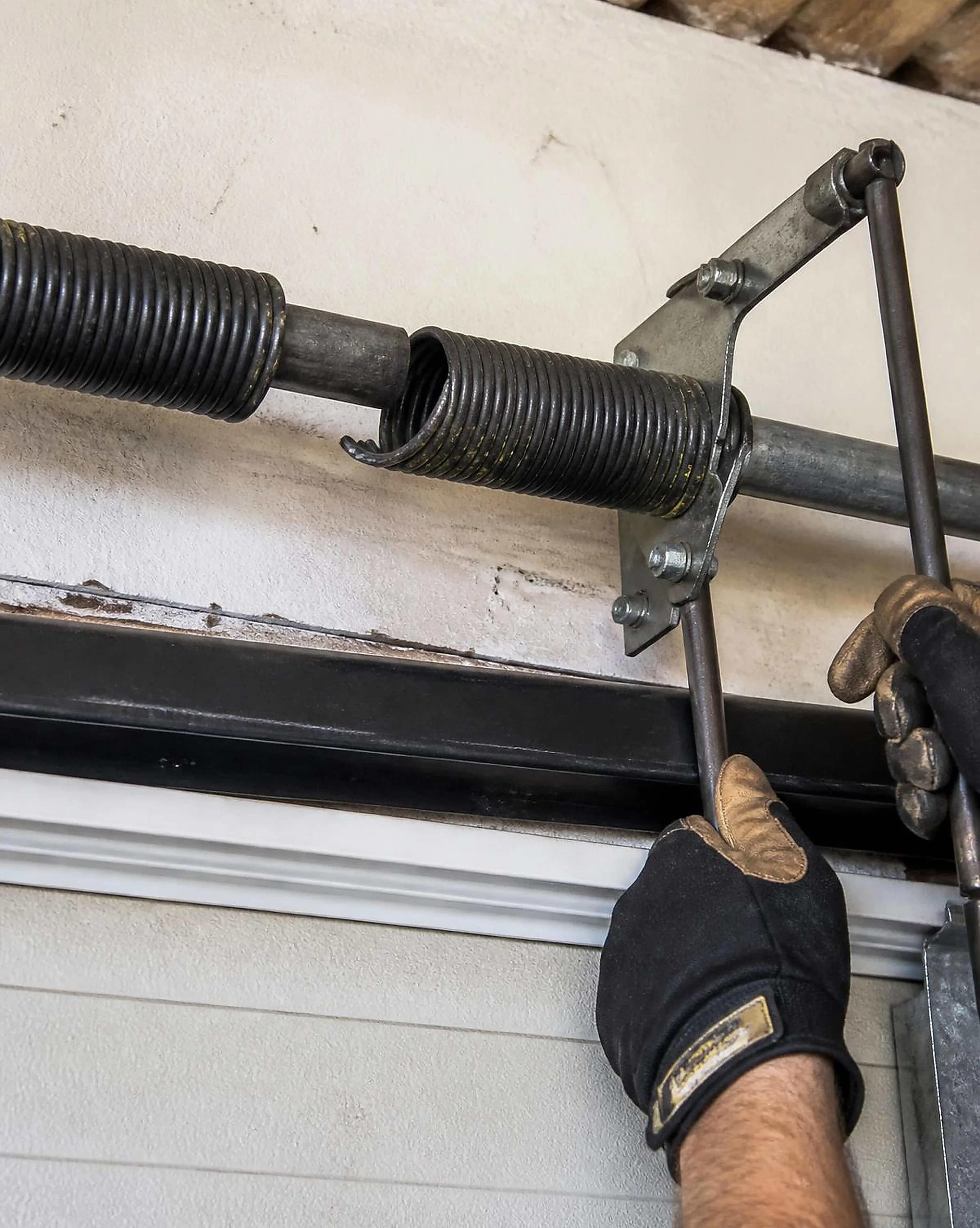
Torsion springs sit on a steel shaft above the door opening. Extension springs run parallel to the horizontal tracks on either side. Both are rated in cycles, where one cycle is one full open and one full close. A builder grade spring is typically rated for 10,000 cycles. A family that opens the door four times a day burns through that in roughly seven years. A high cycle spring rated at 20,000 or 25,000 cycles costs modestly more and often doubles the service life, which is why we recommend upgrading at replacement time rather than matching the original.
How to know a spring is broken
- You heard a loud bang from the garage, often at night, that sounded like a gunshot or a heavy dropped object. That is the spring unwinding in a fraction of a second.
- There is a visible gap of one to three inches in the coil above the door, or a stretched and separated spring beside the track.
- The door feels immovably heavy when you try to lift it by hand.
- The opener strains, hums, or lifts the door a few inches before reversing.
- The top section of the door bends or the door sits crooked in the opening.
Do not attempt a spring replacement yourself
One more piece of advice that saves customers money over the long run: replace springs in pairs. Both springs on a two spring door have accumulated identical cycle counts, so when one fails the other is typically weeks or months behind it. Replacing both at once costs far less than paying for two separate service calls.
Disengaged trolley and the red emergency release
Every opener has a red cord hanging from the rail. Pulling it disconnects the door from the trolley so you can operate the door by hand during a power failure. It is also the most commonly forgotten switch in the entire garage. If your opener runs normally, the chain or belt travels along the rail, and the door never moves, the trolley is disconnected.
- 01Close the door fully by hand so it sits flat on the floor.
- 02Pull the red release cord toward the door, which is the direction of the opening rather than straight down, to reset the release lever.
- 03Press the wall button and let the opener run. The trolley carriage will travel along the rail and click back onto the door arm automatically on most models.
- 04Cycle the door once fully to confirm the reconnection held.
If the trolley refuses to relatch, or you hear a rattling plastic sound inside the carriage, the trolley nut or the gear sprocket has stripped. Both are repairable parts and far cheaper than a whole opener on units under ten years old.
Snapped, frayed or off drum lifting cables
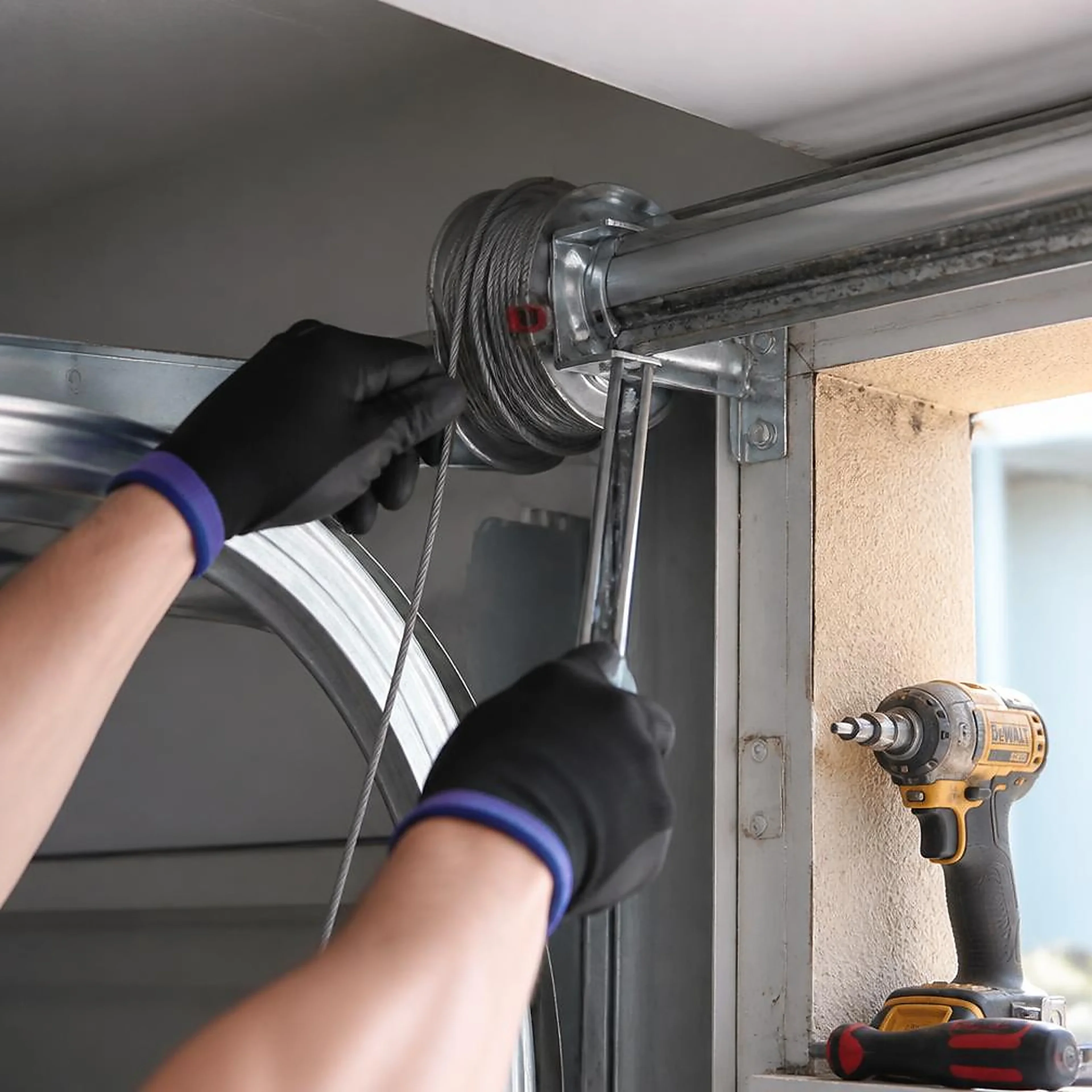
The lifting cables are two galvanized steel cables that run from the bottom brackets of the door up to grooved drums on the torsion shaft. When one snaps or unspools, the door lifts on one side only, wedges in the track, and stops dead. You will usually see the door hanging visibly crooked with a slack cable coiled on the floor.
Cables fail for three predictable reasons in the GTA. Road salt and slush accelerate corrosion at the bottom bracket where the cable meets the door. A door that closes onto an obstruction lets the cable go slack and jump off the drum. And a door that is out of balance grinds the cable against the drum flange until strands break. Inspect the cables twice a year with a flashlight. Any broken strand, kink, or rust bloom means schedule a replacement now rather than after the failure.
Bottom brackets are under spring tension
Lock mode on the wall console and manual slide locks
Modern wall consoles include a vacation or lock button. Hold it for a couple of seconds and the opener disables every remote and keypad while the wall button keeps working. Children press it, cleaning cloths press it, and homeowners press it by accident more often than anyone admits. If the opener light blinks steadily when you press the remote and the wall button still works, hold the lock button for two seconds to clear it.
Older doors also have a manual slide lock, a steel bar on the inside of the door that slots into a hole in the track. Engage it and press the opener and the door will strain against a physical stop, which can bend the top section or strip the opener gear. Confirm the slide bar is fully retracted before troubleshooting anything else. If you never use it, remove the handle or tie it back permanently.
Sensors, force settings and travel limits
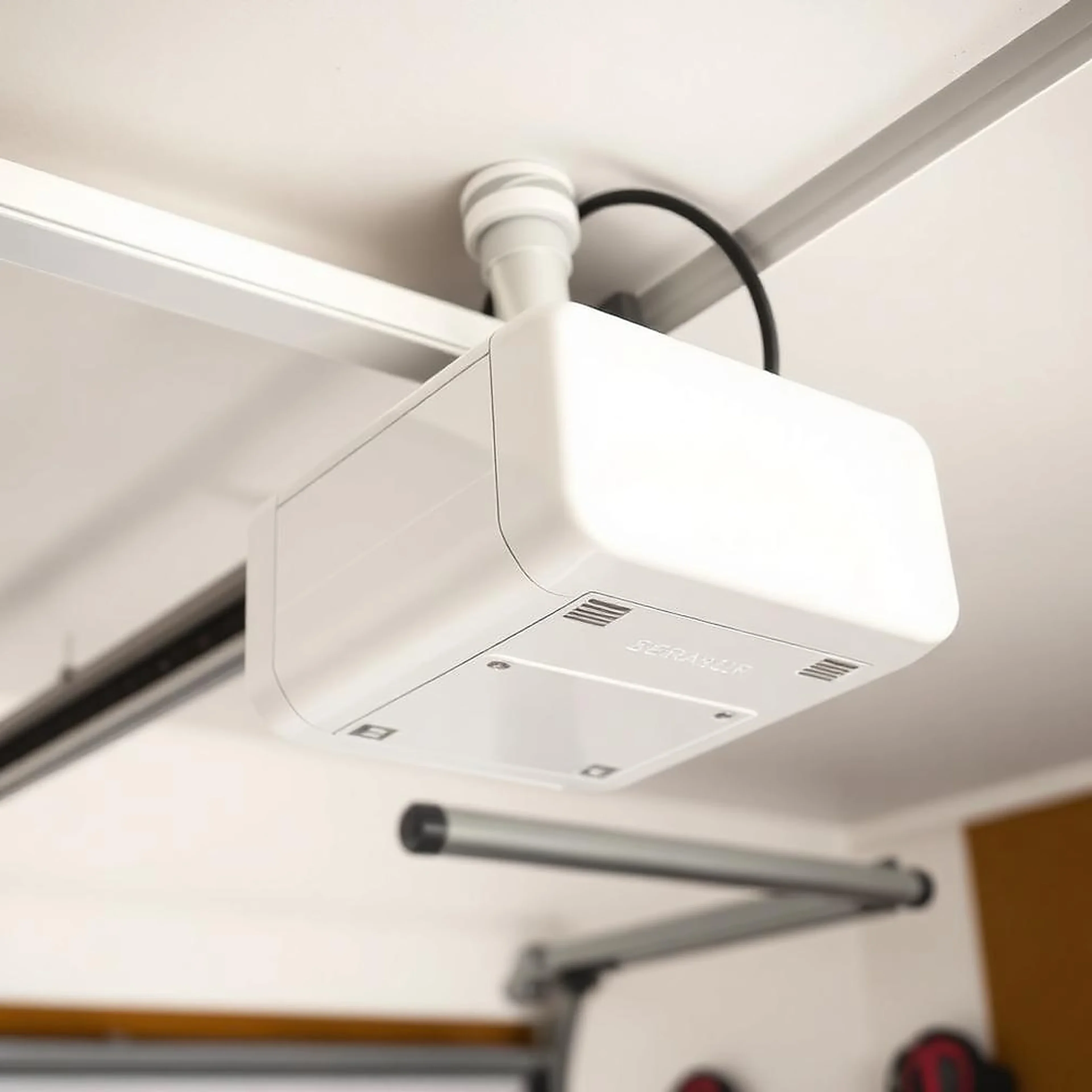
Photo eye sensors mounted about six inches off the floor prevent the door closing on a person or a pet. They mainly block closing rather than opening, but a badly wired or shorted sensor can put an opener into a fault state where nothing runs. Look at the LEDs. Most brands use a steady green or amber on the sending eye and a steady light on the receiving eye. A flickering or dark receiving light means misalignment, a dirty lens, a cobweb, direct low winter sun washing out the beam, or a staple pinching the wire.
Travel limits tell the opener how far to run in each direction. Force settings tell it how much resistance to accept before reversing. Cold weather thickens the grease in the tracks and stiffens the seal, so a door that ran fine in October can trip the force setting in January. Bump the up force slightly, cycle the door, and verify the safety reversal still works by placing a two by four flat on the floor under the door. Never dial the force up to overpower a mechanical problem, because that removes the safety margin protecting your family.
Track damage, flat rollers and a frozen bottom seal
In a Toronto winter, meltwater runs under the door and refreezes overnight, bonding the rubber bottom seal to the concrete. The opener then tries to lift a door that is glued to the floor, senses the resistance, and quits. Pour warm, not boiling, water along the seal or work a plastic scraper under the edge. Never use a metal blade, which slices the seal and creates the exact gap that lets more water in.
Also check for a bumper bar dent in the vertical track, a roller that has jumped out of the track, or a hinge that has torn its screws out of the panel. Steel rollers with worn bearings develop flat spots and bind in the curve. Upgrading to thirteen ball nylon rollers is one of the best value improvements you can make, since they run quieter, roll smoother, and last far longer than the builder grade steel ones.
What these repairs typically cost in Toronto and the GTA
Typical GTA price ranges, 2026
Remote or keypad reprogram
Minimum call
Often solved over the phone at no charge if you can describe the LED behaviour.
Sensor realignment
Service call
Includes bracket tightening, lens cleaning and a full safety reversal test.
Torsion spring pair
$$
Always replace in pairs. Ask for high cycle springs rated 20,000 cycles or more.
Lifting cable replacement
$$
Usually paired with drum inspection and a full rebalance of the door.
Roller and hinge upgrade
$$
Nylon rollers dramatically reduce noise on doors under a bedroom.
Opener replacement
$$$
Worth it once a unit passes fifteen years or the logic board fails.
How to stop it happening again
- 01Run a balance test twice a year. Disconnect the opener, lift to waist height, and confirm the door holds position.
- 02Lubricate hinges, rollers, bearings and the torsion spring with a lithium or silicone garage door lubricant every six months. Never use standard penetrating oil, which strips grease and attracts grit.
- 03Tighten every hinge bolt and bracket lag screw annually. A door cycling a thousand times a year vibrates fasteners loose.
- 04Keep the bottom seal clear of ice and check that the floor drains away from the opening.
- 05Replace remote batteries every autumn before the first cold snap.
- 06Upgrade springs to a high cycle rating when they are replaced, and replace both at once.
- 07Book a professional tune up once a year. Catching a frayed cable in advance costs a fraction of an emergency call.
When to stop and call
Frequently asked questions
Why does my garage door only open a few inches and stop?
A door that lifts two to six inches and stops is usually fighting resistance. The most common causes are a broken torsion spring, a bent track section, a jammed roller, or an engaged manual slide lock. The opener senses the extra load and reverses to protect itself. Stop pressing the button, because repeated attempts strain the opener gears.
Can I open a garage door with a broken spring?
You should not. A double car steel door weighs roughly 150 to 250 pounds and the springs carry almost all of that weight. With a spring broken there is nothing counterbalancing the door, so lifting it by hand risks crushed fingers and a door that slams shut. If the car must come out, call a technician for a safe release.
My remote does not work but the wall button does. What is wrong?
That split is good news, because it proves the opener and the power supply are fine. The problem lives in the remote itself. Replace the battery, clean the contacts, then reprogram the remote by pressing the Learn button on the opener head and the remote button within thirty seconds.
Why did my garage door stop working after a power outage?
Two things happen during an outage. The opener loses its stored travel limits on some models, and many homeowners pull the red emergency release to get out, then never reattach the trolley. Reset the limits per the manual and reconnect the trolley by pulling the release toward the door and cycling the opener.
How much does it cost to fix a garage door that will not open in Toronto?
In the Toronto and GTA market, a simple sensor realignment or trolley reconnection is usually a minimum service call. Torsion spring replacement typically runs a few hundred dollars for a pair, cables are less, and a full opener replacement is the largest line item. Always ask for a written quote before work starts.
Is it worth repairing an old garage door or should I replace it?
A good rule of thumb is the fifty percent test. If the repair costs more than half the price of a new insulated door, and the door is over fifteen years old with rusted panels or repeated failures, replacement usually wins on both energy efficiency and resale value.
Still stuck outside your own garage?
We service Toronto, Mississauga, Oakville, Burlington, Hamilton, Etobicoke, Vaughan, Richmond Hill, Markham, Brampton, Milton and Halton Hills around the clock, every day of the year.