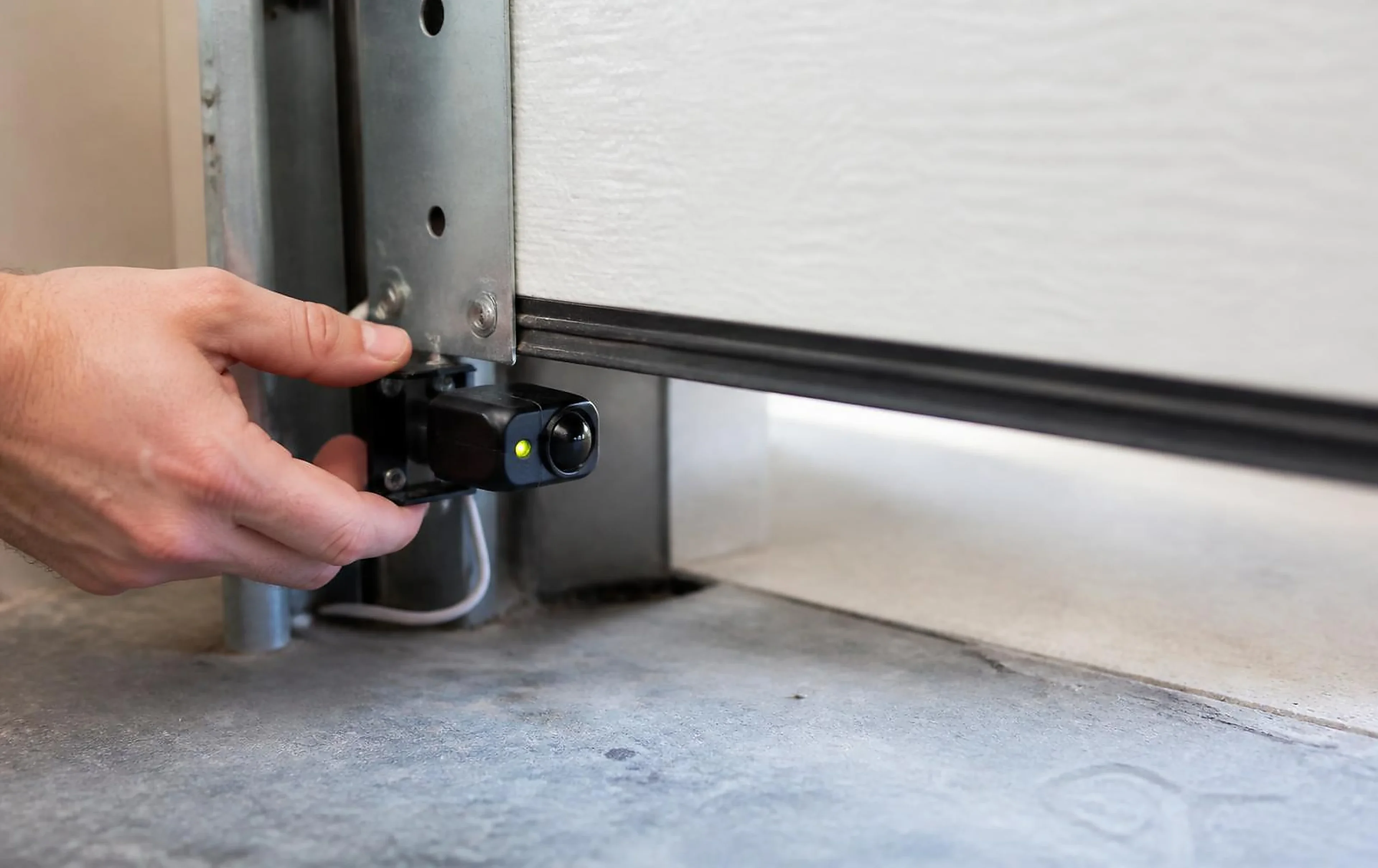
Since 1993, every residential garage door opener sold in North America has been required to include an external entrapment protection system. In practice that means two photo eye sensors near the floor plus an automatic reversal system that senses resistance. Those safety layers exist because garage doors killed and seriously injured children before the rule existed, and they work. They are also, by design, extremely suspicious. When anything is uncertain, the opener refuses to close and sends the door back up.
So when your door will not close, you are usually not looking at a broken door. You are looking at a safety system doing its job in response to something you have not spotted yet. Work through this list in order and you will find it.
Match your symptom in ten seconds
- Door starts down then immediately reverses to fully open. Classic photo eye fault. The opener light usually blinks ten times.
- Door stops partway down and stays there. Usually a physical obstruction, a binding roller, or a close force set too low.
- Door closes fully then bounces back up. Down travel limit set too far, so the door hits the floor and the opener reads it as an obstruction.
- Door will not move at all in the down direction but opens fine. Lock mode, a sensor circuit fault, or a wall console problem.
- Door closes only when you hold the wall button. Definitive sensor circuit fault, because constant pressure bypasses the photo eyes.
- Door closes but leaves a gap of light at one corner. Uneven floor, worn seal, or a cable drum that is out of sync.
Photo eye safety sensors: the cause about half the time
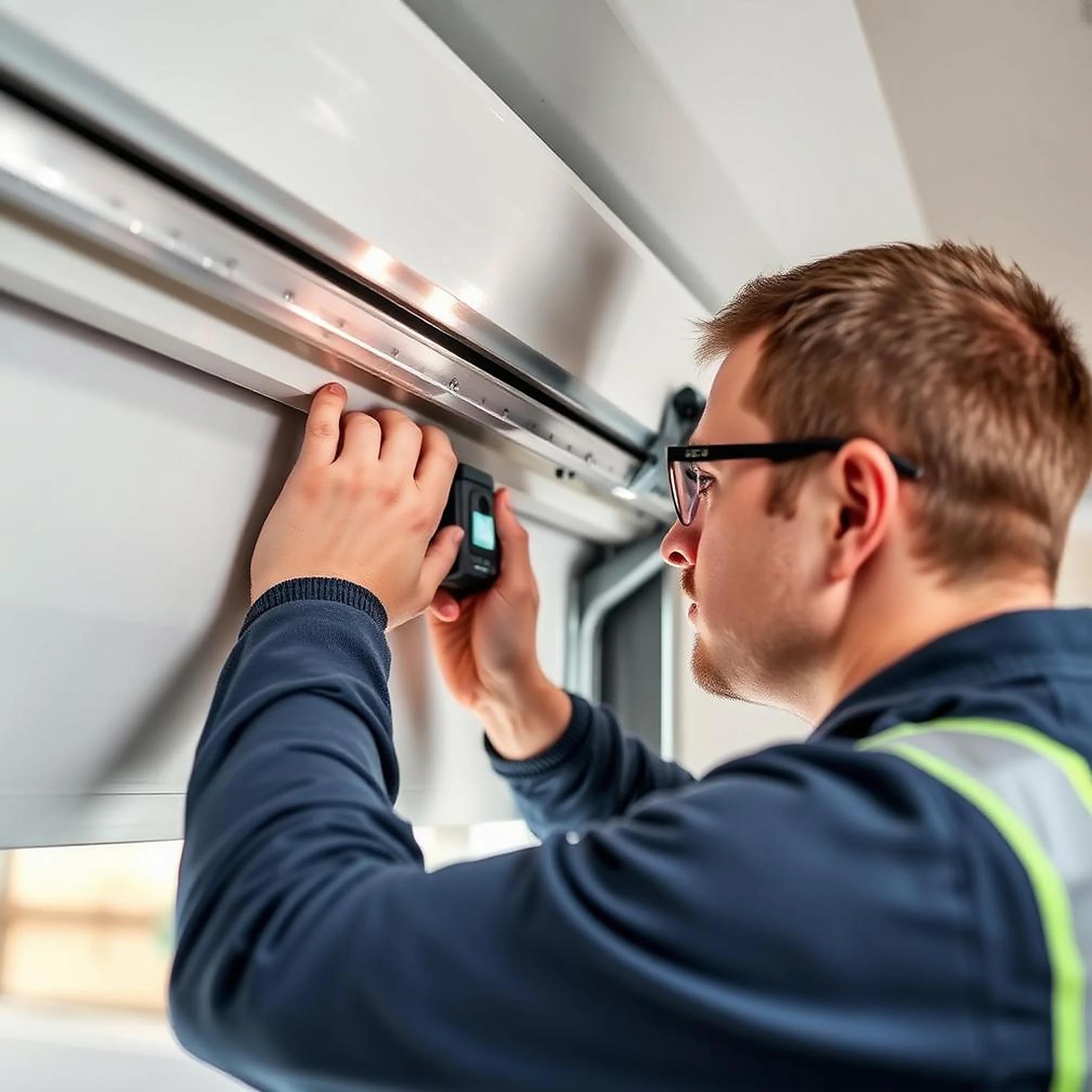
The sending eye shoots an invisible infrared beam across the opening to the receiving eye. Break the beam and the door will not close. Both units carry indicator lights, and reading them is the fastest diagnosis in the whole garage.
Read the lights
- Both lights steady: the beam is intact and your problem lies elsewhere.
- Receiving light off or flickering: misalignment, dirty lens, obstruction, or a wiring fault.
- Both lights off: no power reaching the sensor circuit, often a cut or stapled wire.
- Opener light blinking ten times on a press: the opener has logged a sensor fault.
The five minute sensor fix
- 01Clear the floor. A recycling bin, snow shovel, garden hose, bag of soil or even a thick cobweb across a lens is enough to break the beam.
- 02Wipe both lenses with a soft dry cloth. Road salt film and spider silk are the two most common contaminants in a GTA garage.
- 03Check the height. Both eyes must be the same distance off the floor, no more than six inches, and squarely facing each other.
- 04Loosen the wing nut, swivel the receiving eye slowly until its light goes steady, then tighten without knocking it out of aim.
- 05Trace the wire from each sensor back to the opener. Look for staples driven through the insulation, rodent chews, or a wire pulled loose from the terminal.
- 06Consider the sun. In late autumn and winter, low direct sunlight can saturate the receiving eye in the late afternoon. If the door only fails at the same time each day, shade the sensor with a small hood.
Never disable the sensors
Track obstructions, debris and the things nobody looks at
The mechanical version of the same problem. The door meets resistance, the opener senses the load spike, and reversal kicks in. Walk both vertical tracks with a flashlight and look for pebbles, a hardened blob of old grease, a screw backed out of a hinge, a bent track lip, or a small dent from a bumper tap. Wipe the inside of the track clean with a rag. Tracks should be clean and dry, not greased, because grease inside a track collects grit and turns into sandpaper.
Close force and down travel limits
Two separate adjustments that homeowners frequently confuse. Travel limits tell the opener where the floor is. Force settings tell it how much resistance is normal.
Down travel limit
Set too far and the door hits the concrete, the chain goes slack, the opener reads a jam and reverses. Set too short and the door stops with a visible gap. On chain and belt drives there is a down limit screw or dial on the motor head, and modern models use a button sequence with the door positioned manually. Move it in small increments, a quarter turn at a time, cycling the door after each change.
Close force
Force compensates for the natural resistance of a healthy door. Cold weather, a stiff new seal, or fresh weather stripping can push a door just past the threshold. Nudge the close force up slightly, then run the mandatory safety test.
The two by four test
Rollers, hinges and a track that is out of plumb
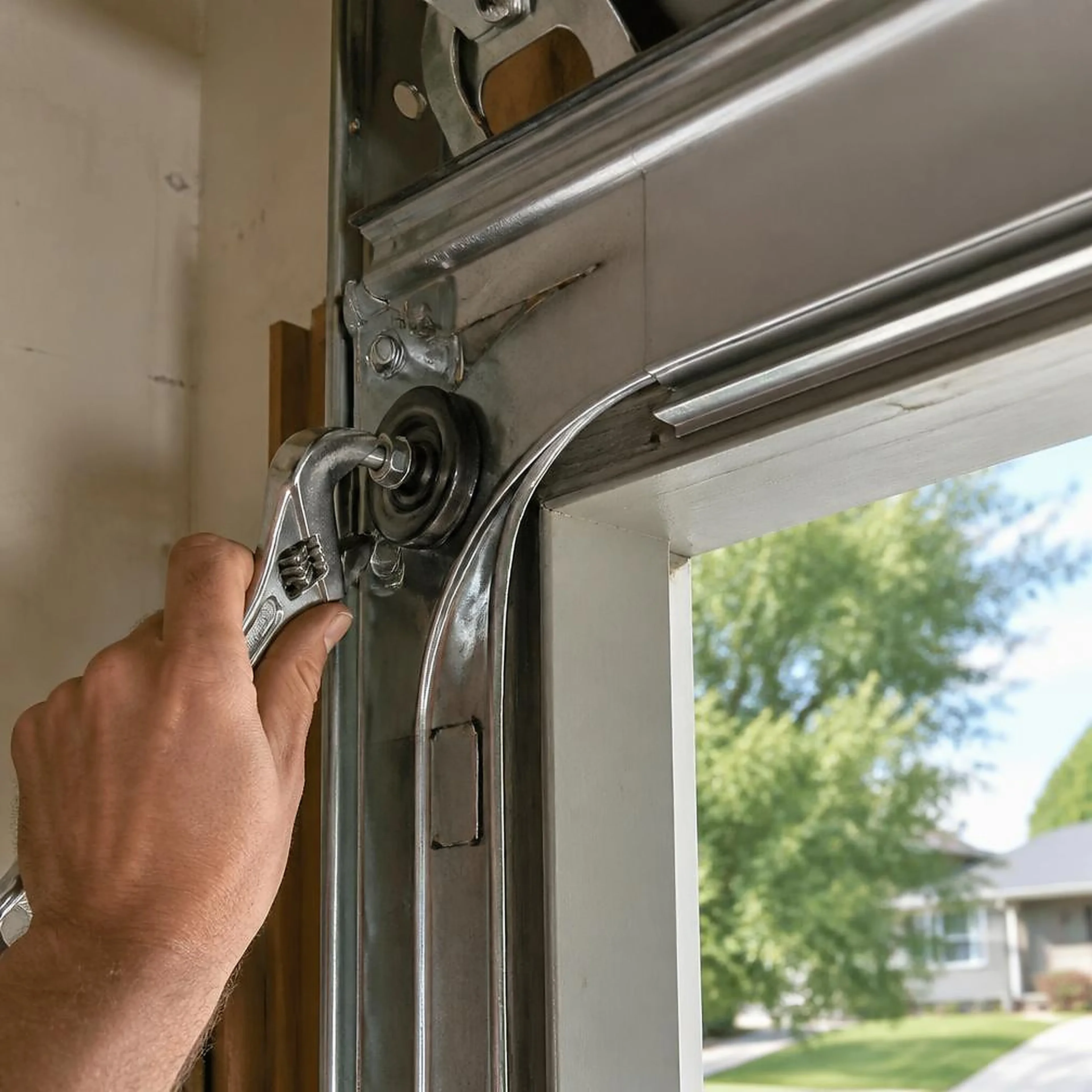
If your door always stops at the same point on the way down, look at that exact height on both tracks. Builder grade steel rollers with unsealed bearings develop flat spots after a few thousand cycles and drag rather than roll. A hinge that has torn out of the panel lets the roller sit at an angle. Both create a repeatable stall point.
Replacing rollers is one of the highest value upgrades on a residential door. Thirteen ball nylon rollers with sealed bearings roll quieter, glide through the curve, take load off the opener, and typically outlast the original steel rollers several times over. On a door under a bedroom the noise reduction alone is worth the visit.
Bottom seal, ice ridges and uneven concrete
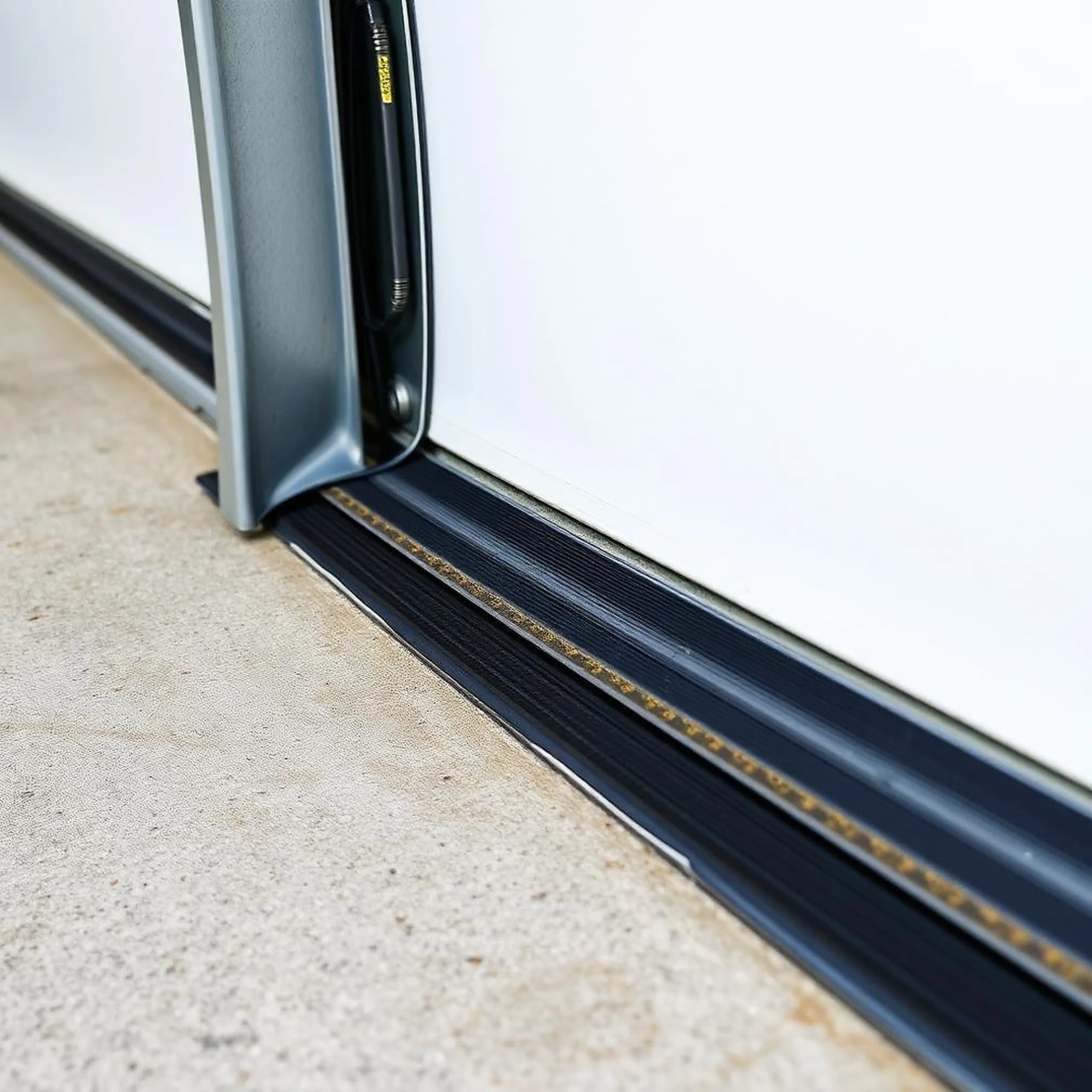
A garage door needs a straight, level surface to seal against. Toronto driveways heave with the freeze and thaw cycle, so a floor that was flat at installation may now hold a low corner. If you see daylight at one edge with the door closed, measure the gap. Under half an inch is usually solved with a taller T style bottom seal. Larger gaps often need a threshold seal bonded to the concrete, which also stops meltwater running into the garage in the first place.
In deep winter, ice buildup along the threshold is the single most common seasonal cause of a door that will not fully close. Chip and sweep the ridge, dry the strip, and check the seal for tears. Replacing a brittle seal in autumn prevents the entire problem.
When the springs are the real story
Here is the subtle one. An unbalanced door does not only struggle to open. It also misbehaves on the way down, because the opener is now managing a load the counterbalance should have handled. Symptoms include a door that closes faster than it should, slams the last foot, drifts down on its own when stopped halfway, or reverses unpredictably at different heights.
Disconnect the opener with the red cord and test the balance by hand at waist height. A door that will not hold position needs spring adjustment or replacement by a technician with winding bars. No amount of force setting adjustment fixes a counterbalance problem, and turning the force up to mask it is exactly how a door ends up dropping on a car bumper.
If the door has to stay open tonight
- Move valuables, bikes and tools out of sight and lock the interior door between the garage and the house.
- If the springs are healthy, lower the door by hand with the opener disconnected and clamp a locking plier onto the track just above a roller on both sides so the door cannot be lifted.
- Never park under a door with a suspected spring or cable failure.
- Do not leave a partially open door unsupported overnight. Either fully open or fully closed and secured.
- Call for twenty four hour service. Emergency securing is a common and quick visit.
What it usually costs in Toronto and the GTA
Typical GTA price ranges, 2026
Sensor realignment and testing
Service call
Includes lens cleaning, bracket squaring, wiring check and a full safety reversal test.
Sensor pair replacement
$
Needed when a housing has taken on water or a lens has crazed.
Limit and force recalibration
Service call
Often bundled with a seasonal tune up rather than billed alone.
Nylon roller upgrade
$$
Ten rollers on a standard double door. Big noise and smoothness improvement.
Bottom seal or threshold seal
$
The best value winter repair on the entire door.
Spring adjustment or replacement
$$
Required whenever the manual balance test fails.
Frequently asked questions
Why does my garage door close halfway then go back up?
A door that reverses partway down has either hit something, thinks it has hit something, or has reached its close limit early. Check the tracks for a bike handlebar or bin edge, look for a flat spotted roller binding in the curve, then adjust the close force and down travel limit on the opener head. If the door also feels heavy by hand, the springs are the real cause.
What do blinking garage door opener lights mean?
On most brands, a steady ten flash blink of the opener light or a blinking wall console LED signals a safety sensor fault. The opener is refusing to close because it cannot confirm a clear beam. Clean both lenses, square the brackets so the eyes face each other, and look for a pinched or stapled sensor wire.
Can I close my garage door manually if the opener will not?
Yes, if the springs are intact. Pull the red release cord with the door fully open only if the door is balanced, then lower it slowly with both hands. If the door feels heavy or drops fast, stop and leave it open, because the counterbalance has failed and the door can slam.
Why does my garage door not close in cold weather?
Cold thickens lubricant, contracts metal and stiffens the rubber bottom seal, all of which add resistance the opener reads as an obstruction. Ice ridges on the floor and packed snow under the seal do the same. Clear the threshold, relubricate with a silicone based garage door lubricant, and have the close force checked seasonally.
How do I know if my safety sensors are bad rather than misaligned?
Alignment problems clear when you gently swivel the receiving eye until its light goes steady. A truly failed sensor stays dark or keeps flickering even when perfectly aimed and clean, or the fault follows the sensor when the two are swapped side to side. Water intrusion in the housing is the usual killer.
Is it safe to hold the wall button to force the door closed?
Constant pressure closing is a manufacturer override intended for temporary use while you diagnose a fault. Never use it as a permanent workaround, never use it if anyone is near the opening, and never use it to force a door past a mechanical obstruction, because the reversal system is your only protection against a serious injury.
Door stuck open right now?
We answer the phone at any hour and secure open doors across Toronto, Mississauga, Oakville, Burlington, Hamilton, Etobicoke, Vaughan, Richmond Hill, Markham, Brampton, Milton and Halton Hills.