A garage door in an average Canadian household opens and closes roughly 1,500 times a year. Every one of those cycles asks a few hundred pounds of steel to roll through a curve, pivot on fourteen or more hinges, and unwind a spring holding several hundred pounds of stored torque. Some noise is unavoidable. Loud, new or changing noise is information, and it is almost always cheaper to act on the sound than to wait for the failure it is announcing.
This guide is built around that idea. First identify the sound, then confirm it with a quick visual inspection, then apply the fix. Along the way you will learn which jobs are perfectly safe with a stepladder and a rag, and which ones you should never touch.
The garage door noise dictionary
Squeaking and squealing
High pitched, rhythmic, and usually worst on cold mornings. This is dry metal on metal at the hinges, roller bearings, and end bearing plates. It is the most common complaint we hear and the least serious. Ten minutes with the right lubricant usually removes it entirely. If the squeal returns within weeks, the bearings are worn rather than dry.
Grinding
A harsh, gritty, metal on metal sound. Two likely sources. Inside the opener, a worn plastic drive gear chewing against the worm shaft, often accompanied by white plastic dust on the garage floor beneath the motor head. Outside the opener, a roller stem dragging in the track or a bearing that has lost its cage. Grinding is never a lubrication issue, so do not spray your way past it.
Rattling and vibrating
A loose, buzzing chatter that seems to come from everywhere. Nuts and bolts on hinges, brackets and the opener rail work loose from constant vibration. Chain drive openers rattle by nature, and a slack chain makes it dramatically worse. Rattling is annoying rather than alarming, but loose hardware eventually becomes a torn hinge, so do not ignore it forever.
Popping or snapping
A sharp crack heard once or twice during travel, usually at the curve. Section hinges binding as panels pivot, torsion springs that have gone dry and are slipping coil against coil, or a door that is slightly out of balance and loading unevenly. Regular popping under load deserves a professional look.
Banging and slamming
The most serious entry in the dictionary. A single explosive bang, often overnight, is a torsion spring failing. A door that slams the last foot on the way down has lost counterbalance and is genuinely hazardous. A repeated bang at one point in travel usually means a bent track section or a panel joint that has separated.
Scraping
Metal dragging on metal at one consistent height. Look for a track that has been knocked out of alignment, a roller riding on the edge of its track, or the bottom bracket contacting the frame. Note the exact height, because that tells a technician where to look immediately.
Straining, humming or clicking with no motion
The opener has power and is trying, but the door will not respond. Broken spring, stripped gear or a disengaged trolley. Stop pressing the button. Repeated attempts will cook the motor capacitor.
The ten minute safe inspection
- 01Close the door fully and unplug the opener so it cannot start while your hands are near moving parts.
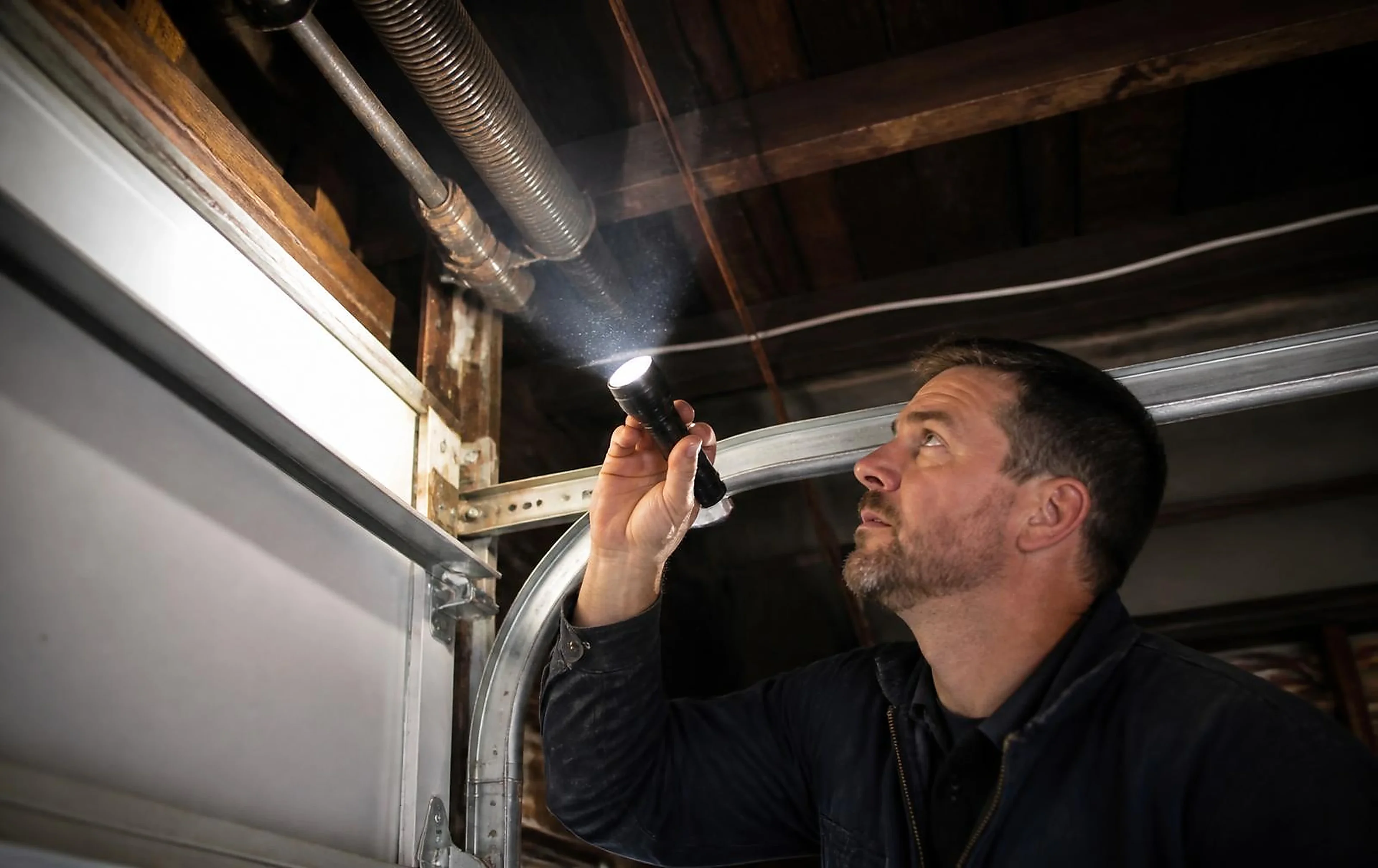
- 02With a flashlight, scan both torsion springs above the door for a gap in the coil, rust, or a coil that looks stretched.
- 03Follow both lifting cables from the bottom bracket up to the drums. Look for broken strands, kinks, rust or slack.
- 04Check every hinge for tearing, elongated screw holes, or a hinge that has separated from the panel.
- 05Spin each roller by hand. It should turn smoothly without wobble, grit or side to side play in the stem.
- 06Run a hand along the inside of both tracks, feeling for dents, ridges and debris. Never grease the track.
- 07Look at the opener rail. On a chain drive, the chain should deflect about half an inch under thumb pressure, no more.
- 08Look under the motor head for plastic shavings, which point directly at a worn drive gear.
- 09Plug the opener back in, disconnect the trolley with the red cord, and lift the door by hand to waist height to test balance.
- 10Reconnect the trolley, cycle the door once, and listen with the new information in mind.
Two things never to touch
Lubrication done properly
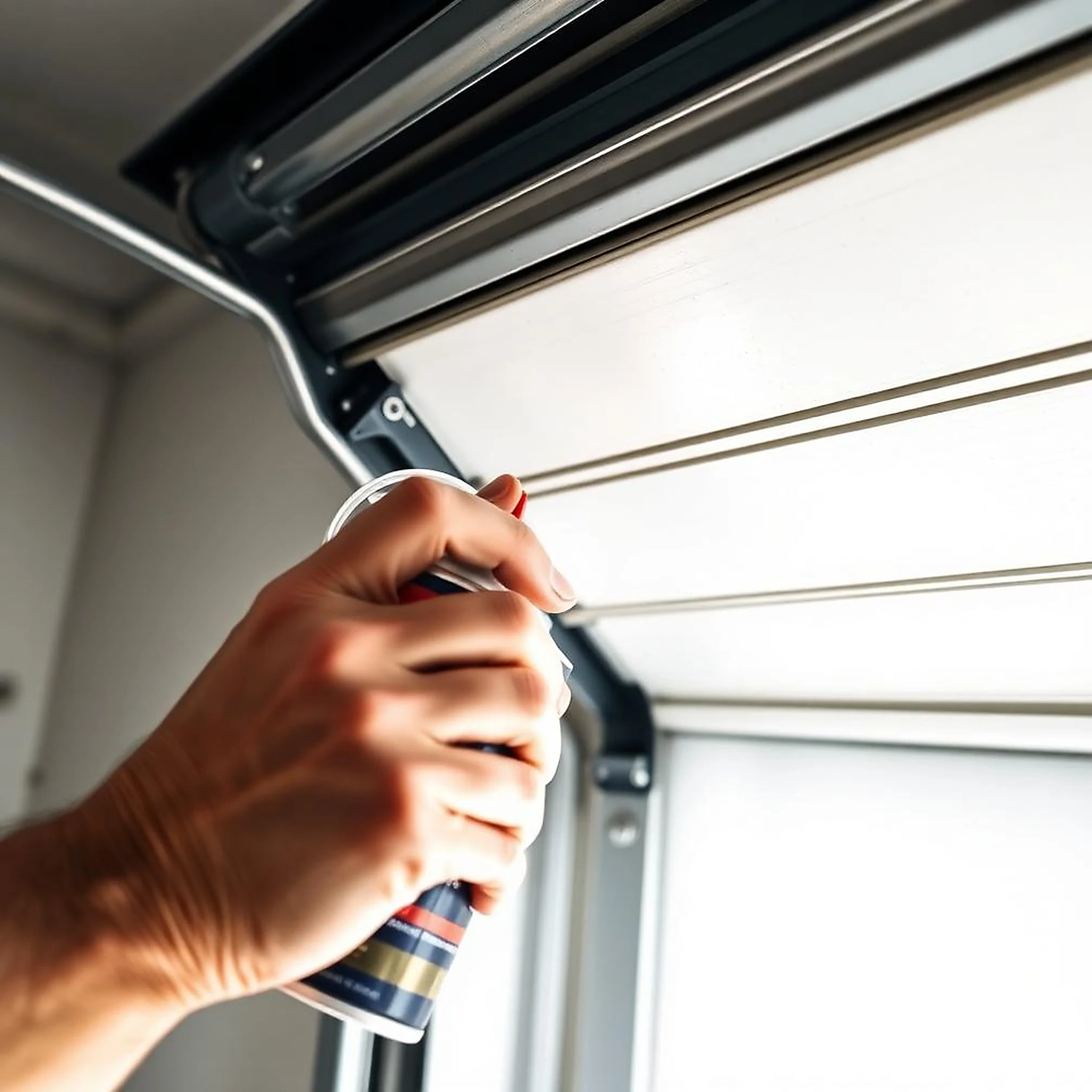
Lubrication is the highest return maintenance task on any garage door and the one most often done wrong. Choose a white lithium grease or a purpose made silicone garage door lubricant. Avoid all purpose penetrating sprays, which dissolve the factory grease in sealed bearings, run off within weeks, and attract dust that turns into an abrasive paste.
Where to apply
- Hinge pivot points, one small shot each, then wipe the excess.
- Roller bearings on steel rollers, aiming at the bearing race rather than the wheel face. Nylon rollers with sealed bearings need nothing.
- The end bearing plates at both ends of the torsion shaft, and the centre bearing.
- The torsion springs themselves, a light even coat along the coil to stop coil on coil friction and slow corrosion.
- The lock bar and any keyed cylinder.
- The opener rail on chain and screw drives, a thin film only. Belt drives need nothing on the belt.
Where never to apply
Never inside the tracks and never on the nylon roller wheels. Tracks are a guide, not a bearing surface, and lubricant there collects grit and makes the door slip and bind. Clean tracks with a rag and a household degreaser instead.
Tightening hardware without overdoing it
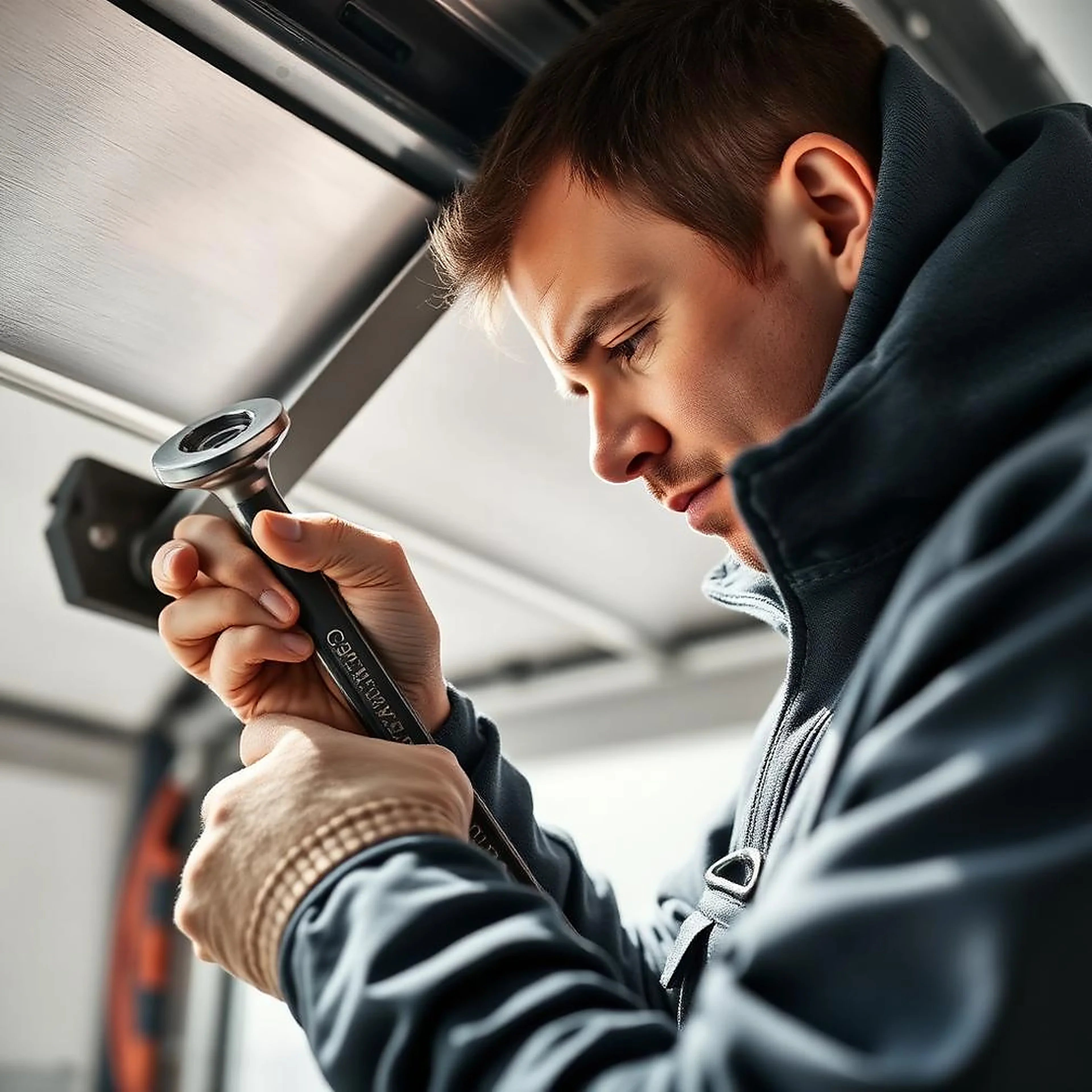
Use a socket wrench rather than an impact driver and work through every hinge bolt, track bracket lag screw, and opener mounting fastener. Snug is the target. Overtightening strips the thin steel of the panel or crushes the hinge, which creates a much worse noise than the one you started with. If a screw spins without biting, the hole has stripped and needs a larger fastener or a hinge relocation, which is a quick technician job.
Pay attention to the opener mounting bracket at the header and the angle iron hanging the rail from the ceiling joists. A rail hung with a long, springy piece of perforated angle acts like a tuning fork and broadcasts every vibration through the house frame.
Rollers: the loudest cheap fix in the garage
If you only do one upgrade to quiet a door, do this one. Builder grade doors ship with steel rollers running on unsealed bearings with as few as five ball bearings per roller. They rumble from new, develop flat spots within a few thousand cycles, and transmit every imperfection directly into the track and the house frame.
Thirteen ball nylon rollers with sealed bearings roll almost silently, need no lubrication, glide smoothly through the curve, and reduce the load the opener has to overcome. A standard double door takes ten rollers and the swap is quick. The difference is usually described by customers as the door sounding like a completely different product.
One roller is not a DIY job
Opener noise and vibration transfer
There are three common drive types and they are not equally quiet. Chain drives are the loudest and cheapest, running a metal chain over a sprocket. Screw drives sit in the middle and get noisy as the threaded rod wears. Belt drives use a reinforced rubber belt and are by far the quietest option, which is the right choice when there is living space above or beside the garage.
Beyond the drive type, three fixes cut transmitted noise dramatically. Install rubber isolation pads between the opener bracket and the ceiling framing. Shorten and brace the hanging angle iron so the motor head cannot swing. And check the chain tension, since a slack chain slaps the rail on every start and stop. Direct drive wall mount openers, which sit beside the torsion shaft with no overhead rail at all, are the quietest solution available and also free up ceiling space.
Balance, springs and cables: when noise is a warning
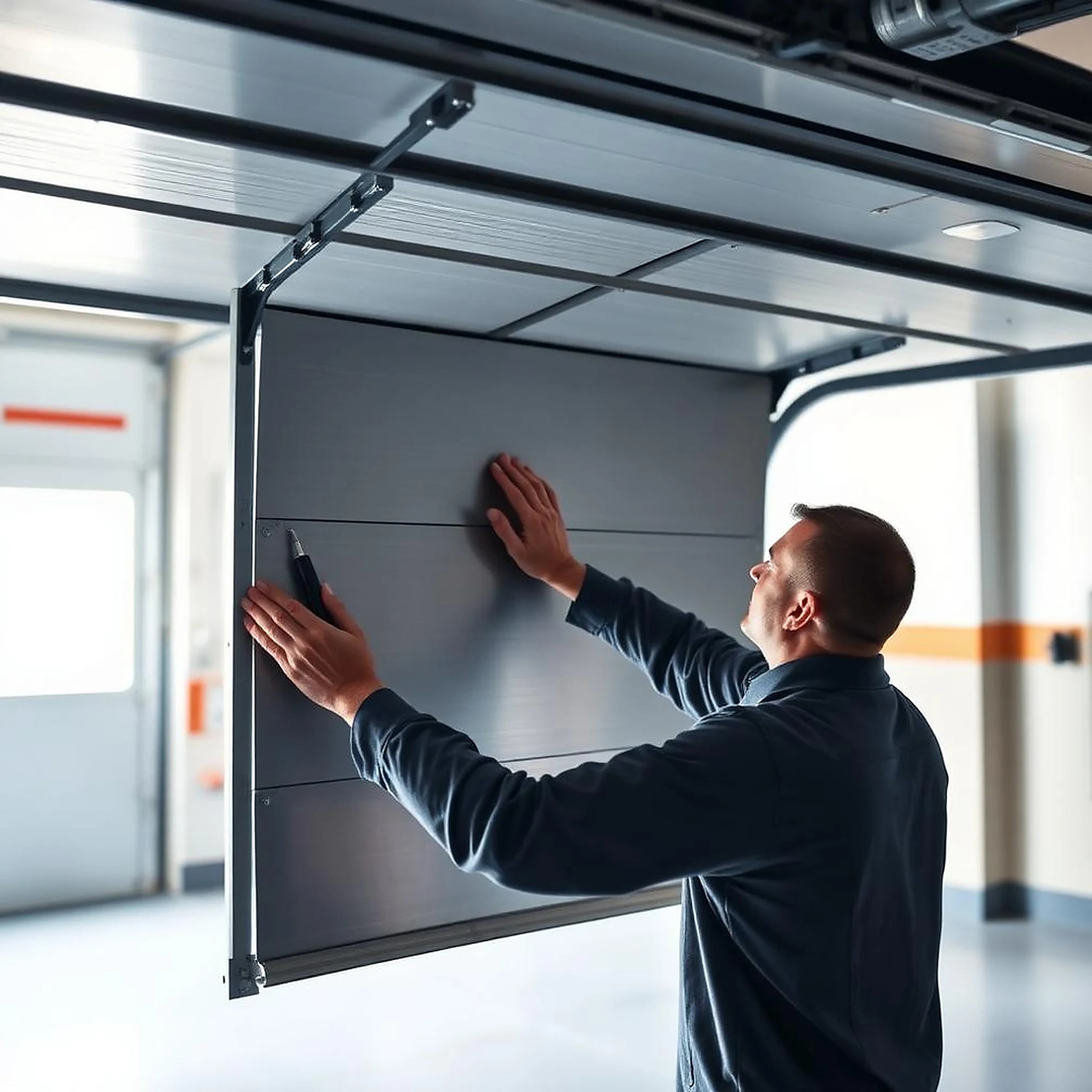
Noise from an unbalanced door has a distinct character. The door speeds up on the way down, drops the last stretch, or the opener labours audibly on the way up. Disconnect the trolley, lift to waist height, and let go. If it holds, the counterbalance is healthy. If it falls or rises, spring tension is wrong.
Springs and cables both wear on a cycle clock rather than a calendar. Ten thousand cycle springs on a busy household reach the end of their rated life in about seven years, and salted winter air shortens cable life in the GTA further. Any coil gap, any broken cable strand, and any rust bloom is a replace now item. Replacing springs in pairs and upgrading to a 20,000 or 25,000 cycle rating is the single best long term value decision on the door.
Noises that mean stop using the door today
- A single loud bang followed by a door that feels impossibly heavy. Broken torsion spring.
- Grinding accompanied by plastic dust under the opener. The drive gear is failing and the trolley can release unpredictably.
- A slapping or whipping sound with the door hanging crooked. A lifting cable has jumped the drum or snapped.
- A door that slams the final foot of travel every time. The counterbalance can no longer hold the weight.
- Scraping at the same height with a visible bulge or dent in the track. The roller can leave the track entirely.
- Any new noise that arrives alongside a door that pauses, shudders or moves unevenly across the opening.
What quieting a garage door costs in the GTA
Typical GTA price ranges, 2026
Annual tune up
$
Lubrication, hardware tightening, balance test, safety reversal test and a full inspection report.
Nylon roller upgrade
$$
Ten sealed bearing rollers on a standard double door. The biggest single noise reduction.
Hinge replacement
$
Per hinge, usually done during a tune up when a stripped hole is found.
Opener gear kit
$$
Worth doing on units under ten years old instead of a full replacement.
Belt drive opener replacement
$$$
The right answer for a bedroom above the garage.
High cycle spring pair
$$
20,000 to 25,000 cycle springs, replaced in pairs with a full rebalance.
Frequently asked questions
Why is my garage door suddenly so loud?
A sudden jump in noise almost always means a mechanical change rather than gradual wear. Look for loose hinge bolts, a roller out of the track, a cracked opener gear, or a spring that has lost a coil. Gradual noise that creeps up over months is usually dry bearings and worn rollers instead.
What does a loud bang from the garage mean?
A single loud bang like a gunshot, often at night with nobody in the garage, is the signature sound of a torsion spring breaking. Cold overnight temperatures contract the steel and finish off a spring already at the end of its cycle life. Do not try to lift the door afterward.
What lubricant should I use on a garage door?
Use a white lithium grease or a silicone based garage door lubricant on hinges, roller bearings, springs, end bearing plates and the opener rail. Avoid standard penetrating spray, which washes away existing grease and attracts grit, and never lubricate the inside of the tracks or the nylon roller wheels themselves.
How do I stop my garage door from shaking the whole house?
Vibration transfer usually comes from steel rollers, a chain drive opener bolted rigidly to the joists, and loose hardware. The three step fix is nylon rollers, a belt drive opener, and anti vibration isolation pads between the opener bracket and the framing. Together they transform a bedroom above the garage.
Is a noisy garage door dangerous?
Some noises are cosmetic and some are warnings. Squeaks and mild rattles are maintenance items. Grinding metal, repeated popping under load, a bang, or a scraping sound at one specific point are load path warnings that indicate spring, cable, roller or track failure, and they need inspection before continued use.
How often should a garage door be serviced?
Once a year for an average household, and twice a year if the door cycles more than four times a day or the garage is unheated. A tune up covers lubrication, hardware tightening, balance testing, cable and spring inspection, sensor alignment and safety reversal verification.
Want your door back to quiet?
Book a tune up or a roller and opener upgrade anywhere in Toronto, Mississauga, Oakville, Burlington, Hamilton, Etobicoke, Vaughan, Richmond Hill, Markham, Brampton, Milton and Halton Hills.